
The Movie
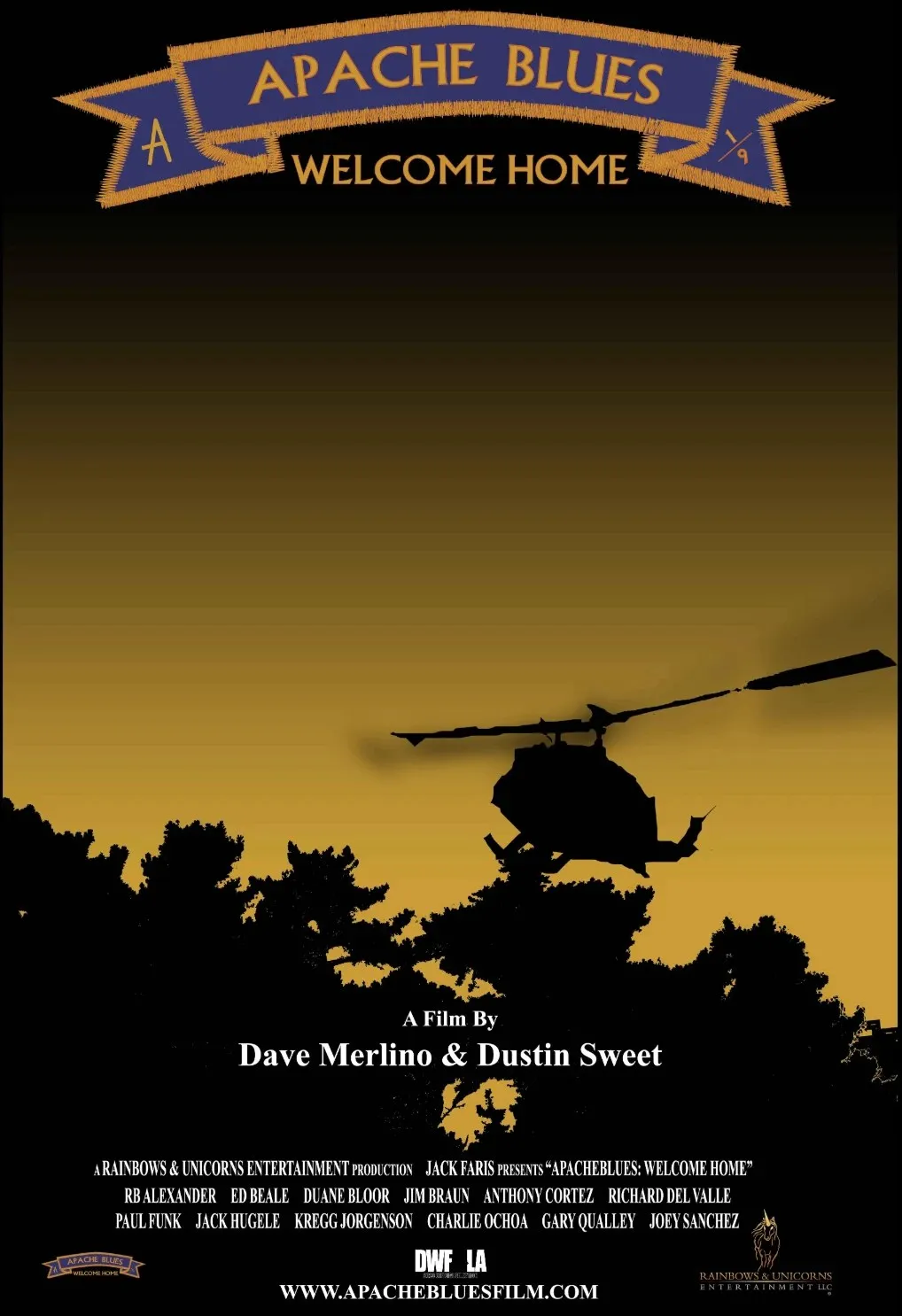
Apache Blues: Welcome Home
Now streaming on your favorite platforms.
In the fall of 1969, Kregg Jorgenson was an Army Ranger patrolling the jungles of Vietnam. On a successful mission, his team could return without ever engaging the enemy. November 17 was a different kind of day.
Surrounded by a vastly superior enemy force, the team lost two men within the first minute, including Kregg’s best friend. Another was severely wounded, leaving Kregg and his team leader to hold off the attack. Told the area was too dangerous for extraction, they were ordered to leave their dead and reach another location. They refused. After more than an hour of fighting, help finally arrived.
Kregg received a Silver Star and a Purple Heart, but does not consider himself a hero. Offered a non-combat assignment for the remainder of his tour, he instead volunteered for Apache Troop, whose missions included rescuing soldiers from desperate situations. He did not want anyone else to feel as abandoned as he had that day.
Kregg’s story is one of many carried by the men of Apache Troop. What happened after they came home is another.
A Different Kind of Homecoming
As filmmakers born after the Vietnam War, we—Dave Merlino and Dustin Sweet—knew it largely through history books, news footage, and movies. Those portrayals often seemed disconnected from the veterans we knew. We wanted to understand that gap and how the politics surrounding the war had shaped the way these men were treated when they returned.
So we hit the road.
Seven years, approximately 30,000 miles, more than 100 hours of interviews, a sea of interchangeable hotel rooms, and probably a few too many gas station danishes later, we had made a very different film from the one we imagined.
Some men had rarely spoken about the war in decades. Others shared memories their families had never heard. Alongside the grief were humor, friendship, and the bonds between men who had depended on one another to survive. When the cameras stopped, the conversations continued.
Over the years, veterans and their families described greater openness, fewer bad dreams, and more laughter following those conversations. What began as our effort to understand the past became a story about what listening could make possible in the present.
At one point, we thought the film was finished. Then someone challenged us: would audiences watch, say “What a great movie,” and get on with their lives—or would they leave ready to talk with the veterans they knew?
We kept working.
APACHE BLUES: Welcome Home explores the power of being heard, and the part families, friends, and communities can play in helping veterans come home.
From the Road to the Screen
The film premiered at Dances With Films at Hollywood’s historic TCL Chinese Theatre, formerly known as Mann’s Chinese Theatre, and went on to complete an Oscar-qualifying theatrical run. It is now available through streaming and digital release.
For those who want to explore the stories beyond the screen, our companion book, Apache Blues: In Their Own Words, presents the complete interviews that shaped the film.
The invitation at the heart of both is simple. You don’t need a camera or a film crew. Just patience, curiosity, and a willingness to hear someone’s story.
Sometimes, “welcome home” starts with listening.
Now streaming